
Published on
16/06/2026
Updated on
16/06/2026
Reading time
2 min
 How Project Agorá is transforming the financial sector
A unique global collaboration
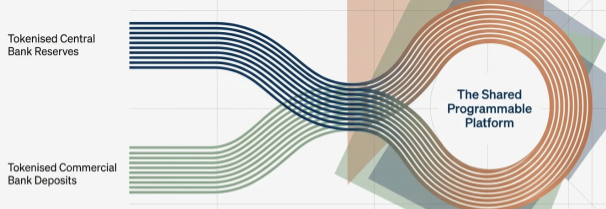
An overview of the technological advantages
- Atomic settlement: In the future, large-value cross-currency transactions can be settled immediately and simultaneously. With appropriate implementation, this could take place around the clock, seven days a week (24/7).
- Smart Contracts: Through the platform, financial institutions can integrate complex business logic, compliance requirements (such as anti-money laundering measures), and conditional payment mechanisms directly into the transactions.
- Radical increase in efficiency: The shared-platform model drastically minimizes the need for reconciliation and error-prone manual interventions. This eliminates the primary causes of delays, costs, and payment defaults in the current system.
Next phase: Real-Value Testing
Starting from May/June 2026: The project is entering the real-value testing phase. The participants—including the ECB (Eurosystem), the Bank of Canada, the Bank of England, the Bank of Japan, the Bank of Korea, the Bank of Mexico, the Swiss National Bank, the Federal Reserve Bank of New York, and over 40 financial institutions—now aim to examine how an Agora-like platform can function within existing legal and regulatory frameworks.
September 2026: Planned go-live of Pontes, an infrastructure designed to connect market DLT platforms with TARGET Services. This could serve as a key interface for the Eurozone during the subsequent testing phase.
A detailed public schedule with concrete milestones for the real-money testing phase is not yet available. BIS emphasizes that this is an experimental project intended not to deliver a finished product, but rather to develop public goods for the central banking community.
This YouTube video provides a brief overview of Project Agorá:
You are currently viewing a placeholder content from YouTube. To access the actual content, click the button below. Please note that doing so will share data with third-party providers.
Share