
Published on
16/11/2026
Updated on
16/11/2026
Reading time
4 min
The digitalization of business processes extends to invoicing as well. While many companies have traditionally sent invoices as PDFs via email, new legal requirements are fundamentally changing the rules of the game. Terms such as “e-invoice” (eRechnung), “XRechnung” and “ZUGFeRD” are suddenly appearing everywhere. But what lies behind these terms, and what do companies need to keep in mind between now and 2027?
The most important insight upfront
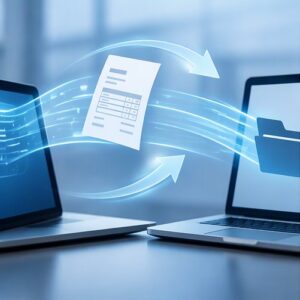
Not every digital invoice is automatically an e-invoice.
Many companies today send invoices as PDFs via email and consider this process to be digitized. From a legal perspective, however, these generally do not qualify as e-invoices.
A genuine e-invoice must be in a structured, machine-readable format so that accounting and ERP systems can automatically process the data it contains.
What exactly is an e-invoice?
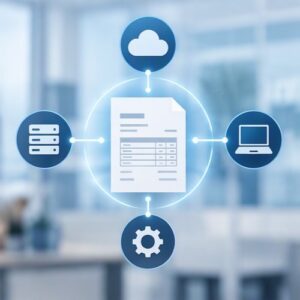
An e-invoice is an invoice in which the information is provided in a structured format. This allows the data to be read, verified, and processed directly by software systems.
The major advantage: there is no need for manual data entry.
Instead of having to type in details such as the invoice number, supplier, total amount, or VAT amount, accounting software can automatically import this information. The crucial difference, therefore, lies not in the method of transmission, but in the structure of the data.
What qualifies as an e-invoice?
| invoice format | e-invoice? | EN-16931-conformant? |
| Paper invoice | ❌ No | ❌ No |
| Scanned invoice (PDF/JPG) | ❌ No | ❌ No |
| PDF via email | ❌ No | ❌ No |
| XRechnung | ✅ Yes | ✅ Yes |
| ZUGFeRD 2.x | ✅ Yes | ✅ Yes |
| Factur-X | ✅ Yes | ✅ Yes |
What does EN 16931 mean?
EN 16931 is the European standard for electronic invoicing. It defines the information that an electronic invoice must contain and how this information must be structured so that it can be processed automatically by software systems.
The standard does not mandate a single file format. Instead, it describes a common data model that can be implemented by various e-invoicing formats.
Among the best-known EN 16931-compliant formats are:
- XRechnung (Germany)
- ZUGFeRD 2.x (EN 16931 profile)
- Factur-X (France; technically closely related to ZUGFeRD)
- Other European invoicing standards based on EN 16931
| Format | Description |
| XRechnung | German Standard for Government Invoices |
| ZUGFeRD 2.x | PDF with embedded XML file |
| Fact | French equivalent of ZUGFeRD |
What is ZUGFeRD?
ZUGFeRD is one of the best-known e-invoice formats in Germany.
Its unique approach: it combines the advantages of a traditional PDF invoice with the capabilities required for machine processing.
A ZUGFeRD invoice consists of:
- a human-readable PDF/A-3 file
- embedded XML data containing all invoice information
This means:
- Humans see a standard, conventional invoice.
- Software systems extract the structured XML data.
The advantages of ZUGFeRD
- ✅ Human-readable
- ✅ Automatic processing possible
- ✅ Reduction of manual entry errors
- ✅ Suitable for small and large companies
- ✅ Compatible with many major, standardized ERP and accounting systems: ZUGFeRD is supported, for example, by solutions such as SAP, Microsoft Dynamics 365, DATEV, Oracle ERP, Sage, and Lexware.
What is the difference between ZUGFeRD and XRechnung?
Alongside ZUGFeRD, the XRechnung format plays a significant role in Germany. It has become the established standard, particularly within the public sector. While ZUGFeRD includes a human-readable PDF component, XRechnung consists exclusively of a structured XML format.
| Feature | ZUGFeRD | XRechnung |
| Readable PDF | ✅ Yes | ❌ No |
| XML data | ✅ Yes | ✅ Yes |
| Human-readable | ✅ Yes | Restricted |
| Fully automated processing | ✅ Yes | ✅ Yes |
| Use by public authorities | Partly | ✅ Standard |
What is already in effect as of 2025?
As of January 1, 2025, companies engaging in domestic B2B transactions are generally required to be capable of receiving e-invoices. This means that any business conducting transactions with other companies in Germany must be able to process incoming electronic invoices.
What will become mandatory from 2027 onwards?
The next phase of the transition begins on January 1, 2027.
Companies with a previous year’s turnover exceeding 800,000 euros will generally no longer be permitted to issue traditional paper or PDF invoices for their domestic B2B transactions.
Instead, they must use an accepted e-invoice format, such as:
- XRechnung
- ZUGFeRD
For many companies, this will necessitate the implementation or adjustment of ERP, invoicing, or accounting systems.
And what happens in 2028?
As of January 1, 2028, the requirement to issue e-invoices will generally apply to almost all businesses in the German B2B sector.
This marks the end of the transition period.
By that date at the latest, companies must have fully converted their invoicing processes to electronic invoices.
What should companies do now?
Those who address the transition early on can not only meet legal requirements but also realize operational benefits.
The following steps are recommended:
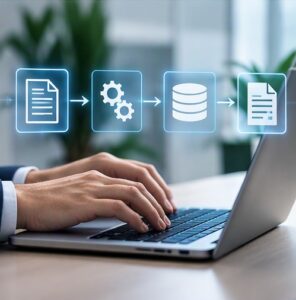
- Check whether your existing ERP or accounting system supports e-invoices.
- Ensure that ZUGFeRD or XRechnung formats can be generated.
- Review internal processes for incoming and outgoing invoices.
- Inform business partners about upcoming e-invoicing processes.
- Launch pilot projects before statutory deadlines take effect.
Conclusion
In the coming years, e-invoicing will become the standard in German business transactions. While a simple PDF invoice will no longer suffice, formats such as ZUGFeRD and XRechnung enable the automated, efficient, and legally compliant processing of invoices.
For companies, the adoption of e-invoicing is therefore far more than just a regulatory requirement; it is also a significant step toward digital and efficient business processes.
The question, then, is no longer whether companies will transition to e-invoicing, but rather when they will do so—and how well prepared they will be.
Share