
An article by
Andreas Wegmann & AI friends
Published on
12/12/2025
Updated on
12/12/2025
Reading time
3 min
In September 2025, SWIFT presented a detailed roadmap for the continued migration of all SWIFT participants from traditional MT messages to the ISO 20022 CBPR+ standard beyond November 2025. The specific end dates for the coexistence of old and new message types for data traffic between financial institutions (FI-to-FI) will be defined.
The goal is to completely phase out the old MT formats in favour of the new ISO message standards, with some older formats being “retired” or “end of life – NAKed” (deactivated). The roadmap also includes regulations for address formats and the introduction of new ISO messages that have no direct MT equivalents.
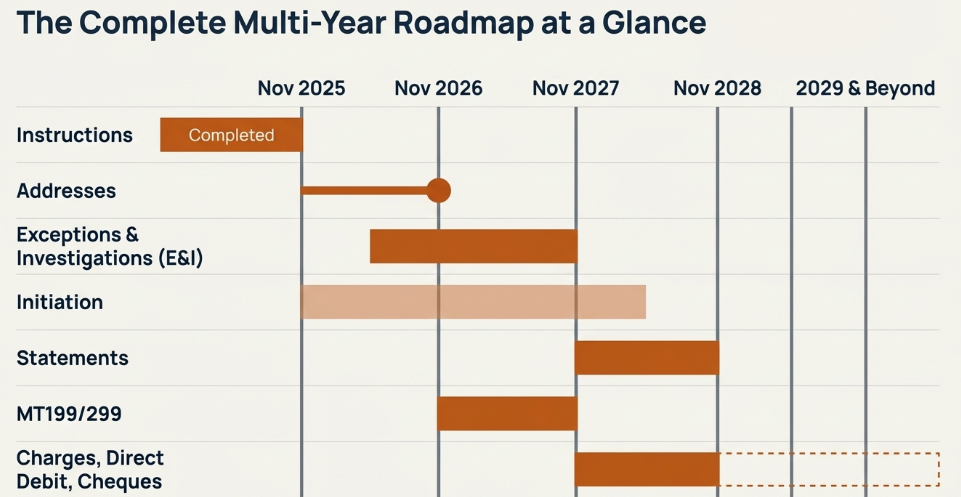
 What will change in message formats (message types) from November 2026?
MT 101 (multiple): The MT 101 variant for multiple transactions will be removed (the single-transaction variant of MT 101 will remain in place, but will be subject to an emergency procedure with additional validations and fees from SR 2026 onwards).
• MT 102 and MT 102 STP (collective transfers)
• MT 103 REMI
• MT 201 and MT 203 (financial institution transfers for multiple transactions)
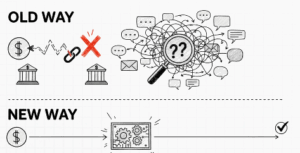
Investigations and complaints: Mandatory phases for ISO formats to begin in 2026
• Obligation to receive camt.110: From November 2026, banks will be obliged to be able to receive camt.110 messages (Investigation Request).
• Case management: From this date onwards, the exchange of payment cancellations (Cancellation Messages) must be carried out via “Case Management” (via FIN/FINplus).
• Note: The old MT formats for E&I (such as MT 195/196) will not expire until 2027, but the ability to receive the new standard must be possible by 2026.
Further administrative changes
• Charges: A new release of the camt.106 message is planned for the charges area.
• Tracker: Although the use of MT 199/299 to update the tracker is considered deprecated, it will still be supported beyond November 2026.
 Formatting of addresses from November 2026
Outlook for further deadlines (still permitted in 2027)
• Exceptions & Investigations (E&I): Legacy formats such as MT 192, 195, 196, 292, 295, 296 and MT 199/299 (for E&I purposes) will not be discontinued until November 2027 (end of life – NAK). Until then, however, institutions must ensure that they can receive ISO messages such as camt.110.
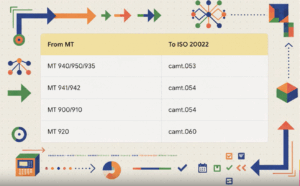
• Account statements and reporting: Formats such as MT 940, 950 and 942 will remain in use until November 2028 (end of coexistence).
• Direct debits and charges: Migration for formats such as MT 104 or MT 190/191 is also scheduled for November 2028.
Share
Weitere Artikel